The Power of Twitter

The 21st century has become the century of mass usage of social media. News and any source of information can now be found through the retweets, likes, and comments by thousands of users. The application that is controlling the live-streams of news to the current day and age users is Twitter. “The revolution will be twittered” (Andrew Sullivan). News travels faster in Twitter than in any other news sources. This is the current situation that this world has become part of.  Altering the ideologies of reality, the use of Twitter has changed the perspective to a more social ideal with technological advancements and capitalist ideals.

Massive amounts of information are processed throughout media. However, the flow of information is not just informational value but also social and cultural values. “The concept of social media participation is an ideology” (Fuchs 102). There are set of ideas that target a particular culture and area of interest.Users can use social media to filter out the information in their own liking. This gives the user more control of what information is present on their feed. This is the entire concept of Twitter. Twitter delivers the information that is shaped and molded for the user’s data and activity. If you filter your preferred news to be about cats, then cat news is what you will see. Social media is the domination of attention and visibility. Twitter is merely an application but the way the user tweaks the application is all up to them. As the access of media is more prominent, technology would have to keep up with the fast-moving pace.

As social ideologies are intertwined with Twitter, the technological ideals are a massive part as well. As more users are going online, Twitter would have to make constant updates to the platform so that more and more people are satisfied with the application. Twitter is populated with these news outlets that helps the app become a dominant area of interaction. Not only through media devices but also the way information is transformed to; pictures, memes, audio, videos of other various forms of news. Because of the creative forms of news, more of the younger generation are able to interact with the updates in a more interactive way. Twitter targets the users with their ideal news with images and videos creating an active environment. This is why social media is a common ground where users can spread and receive news. This is why Twitter is populating. However, with the innovations of a more creative output and input of information based on technological enhancements, users are alienating themselves with their screens from outside events and real people. As technology gets better and better, it will be harder for anyone to get off. It is starting to become part of our daily lives that we have become so blind to it. The ideologies of interaction with another being has changed based of the new updates that Twitter or any social media has made to make one’s life easier to connect.
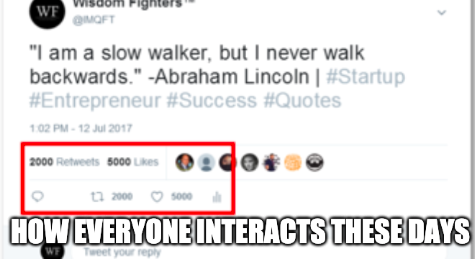
Tweets, likes, comment, retweets are basically the way of communicating with others.

Twitter has become the bridge between the source of news and the prosumers. The prosumers would be exposed to the information, then produce the same information with some different aspects to leave their own signature. The Internet and the overall social media have made it possible to send out information “into the constantly flowing and interconnected streams of local and global networks. As a result, it has become popular to refer to the quantified self as a fact of life in the post-Internet world” (Mosco 101). The high intensity of the flow system that Twitter has implemented in their program has caused the users to see the life stream information in a matter of seconds. Because of high speed force of Twitter, the TV news and articles are not touched upon. There are thousands and or millions of news that could have been spread this second. As the popularity of the application increases, more of the users are exposed to the information, and more and more people are prone to be exposed to it. However, with the constant exposure on the application, the ideals of reality and socially are changing. Reading articles that are longer than the word count on Twitter is viewed to be too long or boring to read. The length on informative videos, the daily news, any reality credible sources are seen to be the last resort the 21st generation is going to put. “Although they are influenced by, and also help shape, political, economic, and social institutions, myths are deeply cultural because, at root, they are about making meaning through stories and about enacting values in discourse” (Mosco 119). The 280-word limit is said to be enough for the user. The post just scrapes the basics of the news while an article or journal dives deeper into the meaning. The avoidance of too much information is shifting the reality ideologies to be short and discreet. This change is also come hand-in-hand with capitalist ideologies.
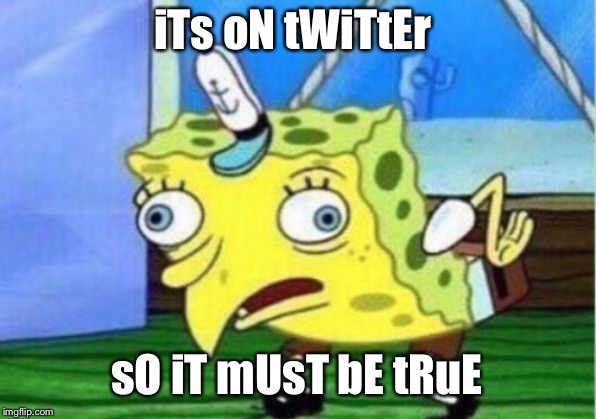
This is the mindset of the current generation. Because it’s on Twitter, then any news is true.

The main drive for a company is to bring more exposure and profitability in their platform. I know this because I am a Business major. If a concept is successful to bringing the audience to their direction, then the company would stick with that idea, innovate it, and see how long it will last for the next idea would capture the audience. Many of the social media corporations are using their platform to target specific advertisements based on the data and behavior of the user. This is only bringing more capitalism to an already capitalist nation. This is the revolving of money. “Social media prosumers are double objects of commodification: they are commodities themselves and through this commodification their consciousness becomes, while online, permanently exposed to commodity logic in the form of advertisements” (Fuchs 108). Because of the constant personal interests on a person’s feed, this gravitates the user to be on it 24/7. “All online time on corporate social media like Google, Facebook, and Twitter is surplus labour time” (Fuchs 111). Because there is no commodity in value for using the application, the time that is spent on the application is transformed to surplus labor time. Baran have stated that children from the ages from 8 to 18 years old are constantly on media content for more than 10 hours and 45 minutes per day. For this generation, Twitter has been one of the most constant clicked application for any sort of information. It was only in recent years that Twitter was created and it only took a matter of time for Twitter to climb up the ladder to match with major social media networks like Snapchat and Facebook. Twitter has created the gravitation of great informational deliverance to the user that makes it harder to get off the application. I have seen the 21sth generation to be constantly on Twitter, moving their little fingers tweeting, retweeting, liking, commenting, interacting with the social world of media. The amount of news in constant ongoing to the application is eye-opening. This is the entire purpose; grabbing the most amount of attention from the public in a business standpoint. This is the ideologies of capitalism in a constantly innovating application.
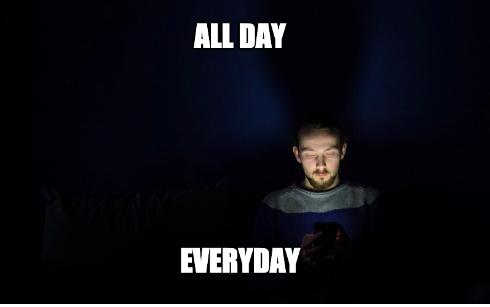
Companies want to gain profit and the only way to do so it to get the user hooked onto the app.

            With the instant speed of news from one user to another, Twitter has caused great popularity among the users. Nowadays, news is only known through the constant retweets, likes, and comments of the people across the world. The ideals of the worlds are rapidly involving into the social ideologies. With the innovations of technology and capitalist motives, users are starting to change their habits and thoughts as seen in Twitter.  As Twitter targets favorable news, social and cultural values to the users, value in the application has grown. This is why Twitter has become the new media and news source compared to news online and in the TV.

Work Cited

Baran, Stanley J. “Mass Communication, Culture, and Media Literacy.” In Introduction Mass Communication: Media Literacy and Culture. New York: McGraw-Hill, 2015. Pp. 3-27.

Fuchs, Christian. “The Power and Political Economy of Social Media.” In Social Media: A Critical Introduction. London: Sage Publications, 2014. Pp. 97-122.

Mosco, Vincent. “The Body and Culture.” In Becoming Digital: Toward a Post-Internet Society.

Bingley, UK: Emerald House Publishing, 2017. Pp. 97-128.
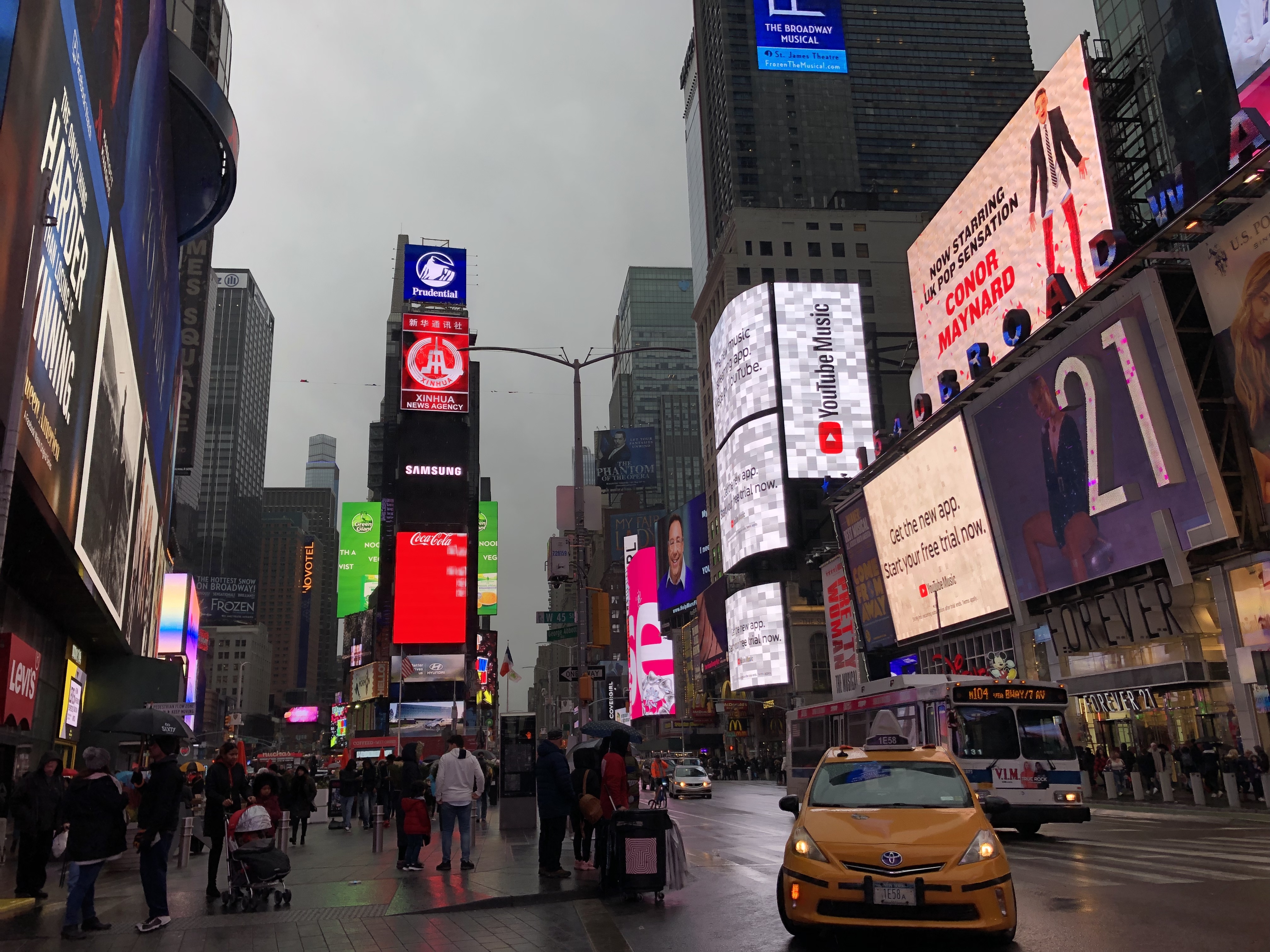
Needs or Just Wants?

Constant visuals of advertisement in Times Square, the center of New York. One of the main area of 24/7 advertisement broadcasting with vivid and standoff protrayals.
Taken by Hannah Lee

There have been many cases where I purchased something because someone else had it. I don’t know about you but I love it when I have the same thing as someone famous. It just makes that object feel like I have some special bond with them.

Constantly looking on many social media platforms, sponsored ad posts constantly pop up on my feed. I and many viewers are reeled into the company’s trap. Advertisement and marketing play a huge role into hooking the viewers into thinking that they need the product but in real life can life without it. “The Hollywood film industry, television, satellite broadcasting technologies, the internet, … and other media forms and technologies have transformed culture into a pivotal force in “shaping human meaning and behaviors and regulate(ing) our social practices at every turn” (Hall 232). With popularized platforms along with a person’s ideologies, wants can immediately change into needs.

My favorite Youtubers sponsored by Hello Fresh. Information about the overall subscription with their distinct discount codes.
Edited: Hannah Lee

        Anyone and everyone have a social media account. If they don’t then they have been living under a rock for the past decade. Social media has become such a norm to one’s life that trying to not go on social media for an hour is so called impossible. Now a days, influencers and creators on the platform can make a living by creating content. It is an arena where creativity is at its full bloom. However only uploading creative content cannot be the only way that these people can make a life income. True money comes from sponsored ads that major corporations have paid the creators to create and post. My favorite YouTubers are Jenn Im, Weylie, Sophia Chang, Amy Lee and Claire Marshal. (Asian represent!) As a devout viewer, I always notice that at least one out of ten videos consisted of content that was with a collaboration with a company who sponsored them. It’s tagged with the hashtag ad but despite the pre-notice that the YouTubers give, views are always there.  Not one of my favorite videos to watch because it doesn’t showcase natural lifestyle but I still watch them because it’s them. And always at the end of the video I contemplate if it’s something I need.  “Mass produced images fill our daily lives and conditions our most intimate perceptions and desires” (Giroux 255). Making a mark on influencers and using the reputation and effect they have on people to promote causes sale and popularity rates to increase. Giroux states that with constant exposure to the advertisements, then the way one sees the product can flip the person’s desire to buy it.  One example is a brand called HelloFresh. HelloFresh is a meal delivery service where prepackaged and pre-measured ingredients are shipped to one’s door for a perfect simple meal plan. Though multiple showcased sponsorship with many YouTubers, HelloFresh was able to receive the popularity and daily subscriptions. Not only receiving high praises from the YouTubers who implemented that to their daily eating, they chose the right platform to advertise their brand. “The immediate mission is to sell goods; the long-range mission is to maintain the class system. In order to sell goods, advertising has to change attitudes, lifestyles, customs, habits, and preferences while at the same time maintaining the economic system that benefits from these changes” (Berger 52). This quote from an article called Marxist Analysis shows that advertising innovated, not to just showcasing the product onto a billboard, by integrating it to one’s life to see how much they can use it an everyday lifestyle. Exactly how the companies are using YouTube as an environment to change their ways of advertisement to receive more attention. Not only YouTubers but also uprising stars have made their mark into the advertising realm.

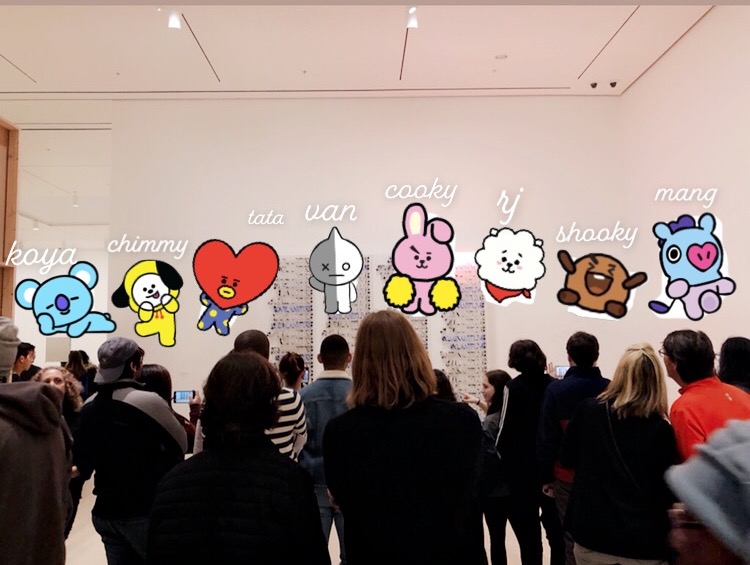
People are gathered from different backgrounds to get merchandise created by BTS. The amount of attention and love for the group is mesmerizing and impactful.
Photo taken and edited: Hannah Lee

        In this century, K-pop is now becoming a world phenomenon. Starting small from a tiny peninsula in the Asian region, it has exploded globally through the increasing numbers of global fans. Now that K-pop has become a revolution across the world, K-pop merchandise has skyrocketed. One very popular example would be a group called BTS. BTS has become the first Korean group to ever hit the US in such massive power. Appearing on the Grammy Awards, James Corden Show, the Ellen Show, this group is marking their fame globally. Now being the hottest topic of the world, they took that heat to another level. Collaborating with one of the popular Korean messaging company, Line, BTS drew their own cartoons representing themselves. The pictures turned into keychains, pillows, and collectables that fans could buy as a representation of their favorite member and of the group. One of the many pop up stores was located in the heart of Hollywood. From what I heard, the line for the opening day wrapped around multiple blocks. Die heart fans dedicate their time and money for obtain precious merchandise. Sold out online and in-store. There seems to be a reason why the Korean entertainment labels famous celebrities as “idols”. Because BTS is a group with a huge fan base, more people gravitate towards the merchandise by adding it in their cart and pulling the trigger. It is an illusion of need disguising as a want. Blinded by love, a person’s consciousness is barricaded with the idea of them. It is the false ideologies and beliefs that by receiving these items would bring never ending love. From Ideology by Williams, the way we live in the social aspect of life gives certain things of value and of meaning to us. The meaning behind this is that based on the reality that we are living in, value in certain things change. Fans have incorporated BTS into their lives because of the heat of their emotions. That heat then has transferred into their overall thinking, correlated to the wants of having merchandise created by them. Not only BTS but in the Korean media industry of the entertainment system. Showcasing idols in the visible platform, viewing rates would drastically increase. Despite what the content is, whether it’s daily or entertainment, I always notice on Instagram what clothing they wore, where their bag is from, and even the brand of their phone cases if displayed. As K-pop has obtained the spotlight, some extreme fans would do anything in their power to get branded products or even on the more extreme side, become like them. Our overall significance about anything in the world can then be our actions that change the world and how we see the world. With the help of advertisement in the K-pop industry, significance in these merchandises can change viewpoints of a person. Before K-pop has become such a booming topic, a popular company has captivated the hearts of many ever since the beginning; Disney.

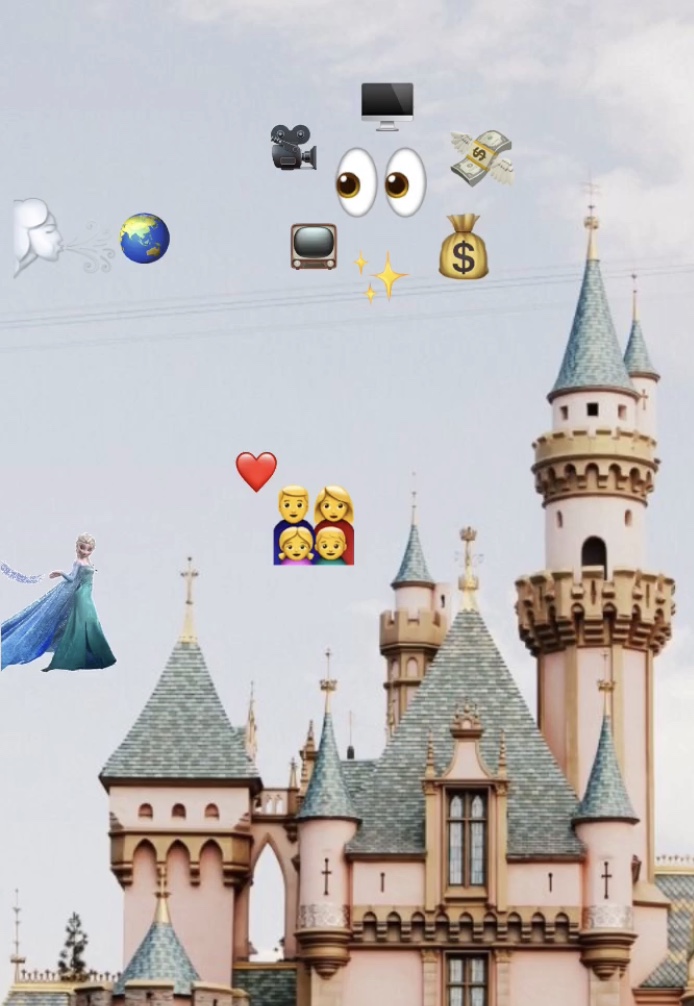
Disney has captivated many hearts. Captured audience’s attention through many entertainment and advertisement platforms.
Image from Pinterest.
Edited: Hannah Lee

        Disney has the reputation of innocence, magic and imagination all in one. With the image of being the happiest place on earth, Disney has captured many hearts young and old. Innocence of a child is used to grab their attention and have them want the next Elsa doll after watching Frozen. The desire of having the doll brings a smile onto their face and the parents would want nothing to stop that from disappearing. “A 130 billion dollar a year advertising industry, which not only sells its products but also values, images, and identities that are largely aimed at teaching your people to be consumers” (Giroux 254). The massive influence that Disney has on kids has become a great power in advertisement. Despite the age of a person, the fact of wanting and buying a product has caused them to be part of the business industry. Giroux states that the transaction of cash flow has given anyone the opportunity to partake as a consumer. As their industry has been very active in the entertainment production, Disney’s advertisement and overall control of the media is just as overpowering. Attentive with how and what the customer wants, Disney holds the power to reconstruct a person’s demand.

        The power of the media and entertainment has molded the interest of many people. Idolizing groups like K-pop, people from social media has caused the desire of wants into the desire of needs. No matter what the content of the advertisement is, if it grabs the customer’s attention, then their job is done. This world’s a scary place that knows how to control a person’s perception.